

KazNU lab equipment and expertise — open to business
You bring the task: analysis, testing, calculation or R&D. You sign with the hub, the university laboratory does the work. One accountable party, one invoice, a clear deadline.
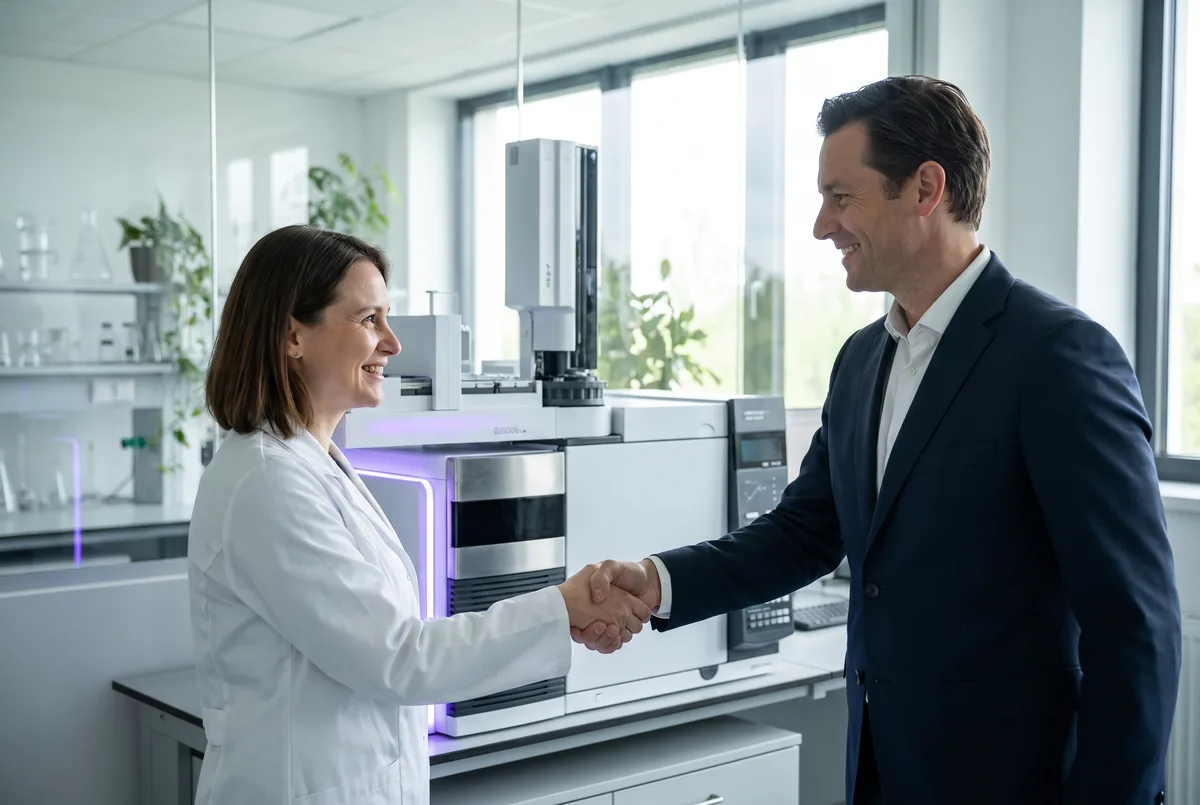
Some cards are compiled from public KazNU sources and not yet confirmed by the labs — this is marked on the card itself. Photographs are design images, not shots of the actual laboratories.
This catalogue is informational: it was compiled by the hub from open sources and is not an offer. The hub does not act as a representative of the university and does not dispose of its equipment. Scope, timelines and prices are confirmed by the laboratory for every request.
Who can take on your task
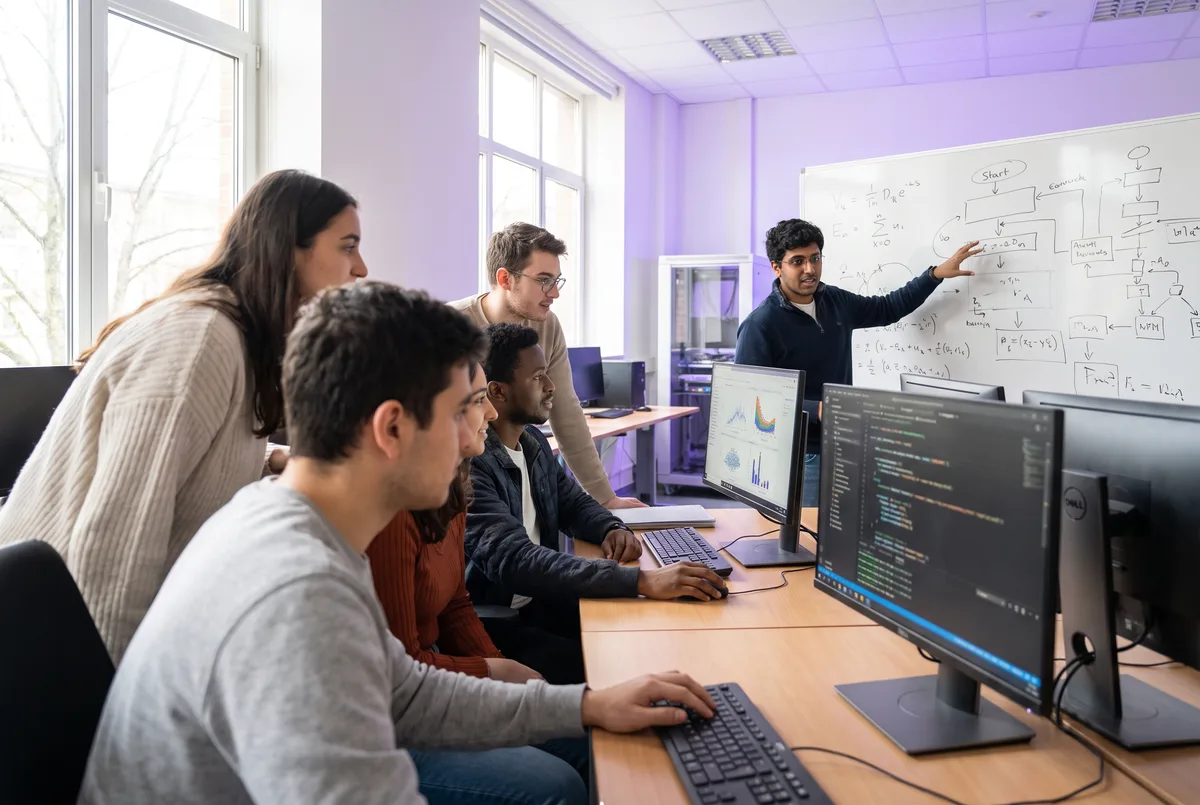
AGI Research Center and AI MediaLab
Large language models and applied AI, with tracks in medicine and media. The closest center to business when the question is AI inside a company’s own perimeter.
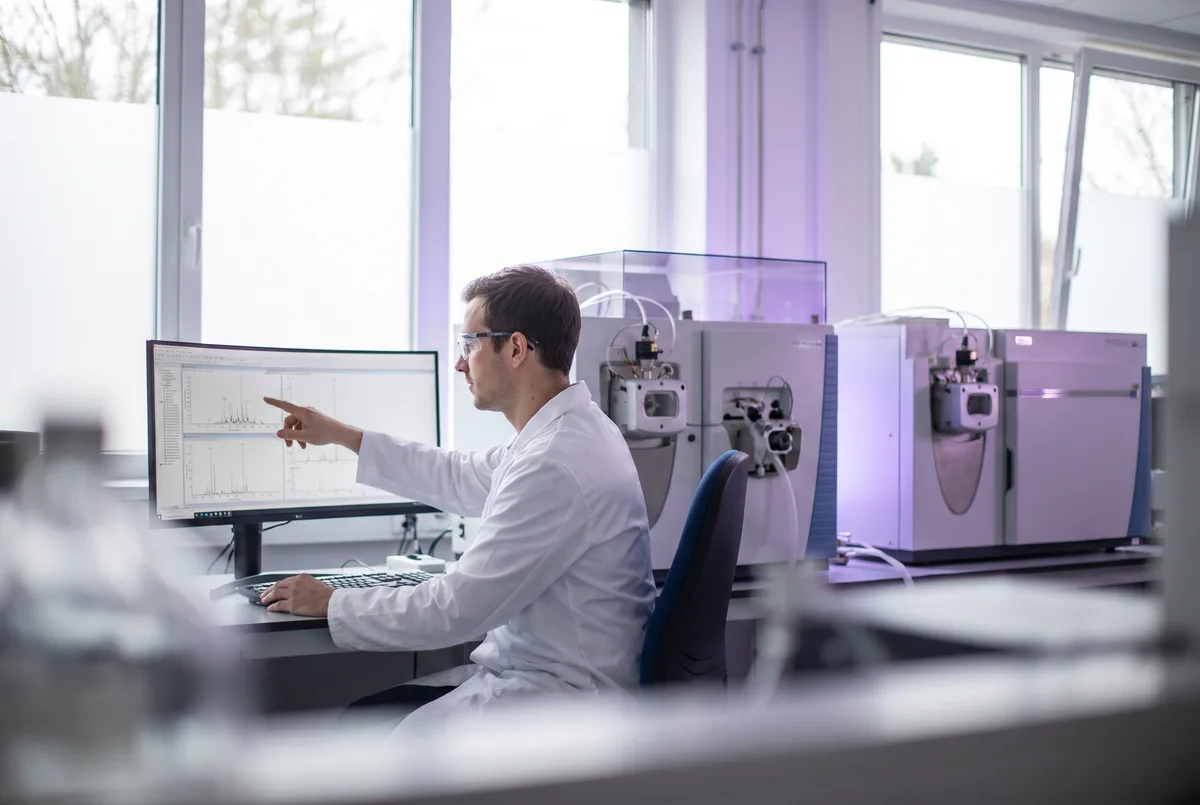
CPCMA Testing Center
Testing of water, effluents, soil, air, petroleum products, food and metals — six laboratories working to state standards. Public sources state that the center claims accreditation by the National Accreditation Center of Kazakhstan.
CPCMA — Center of Physico-Chemical Methods of Research and Analysis
The university’s analytical core: public sources report 13 laboratories and over 150 staff. Chromatography, mass spectrometry, elemental and radiation analysis — this is where samples go when an instrumental answer is required.
Center for Space Technologies and Remote Sensing
Working with satellite data: Earth remote sensing, thematic image processing, space monitoring of territories. Public sources mention participation in the NKSAT satellite project.
Data Science in Astrophysics Laboratory
Opened in 2024. Analysis of large observational datasets plus in-house compute — the rare case where the university has a cluster, not just a method.
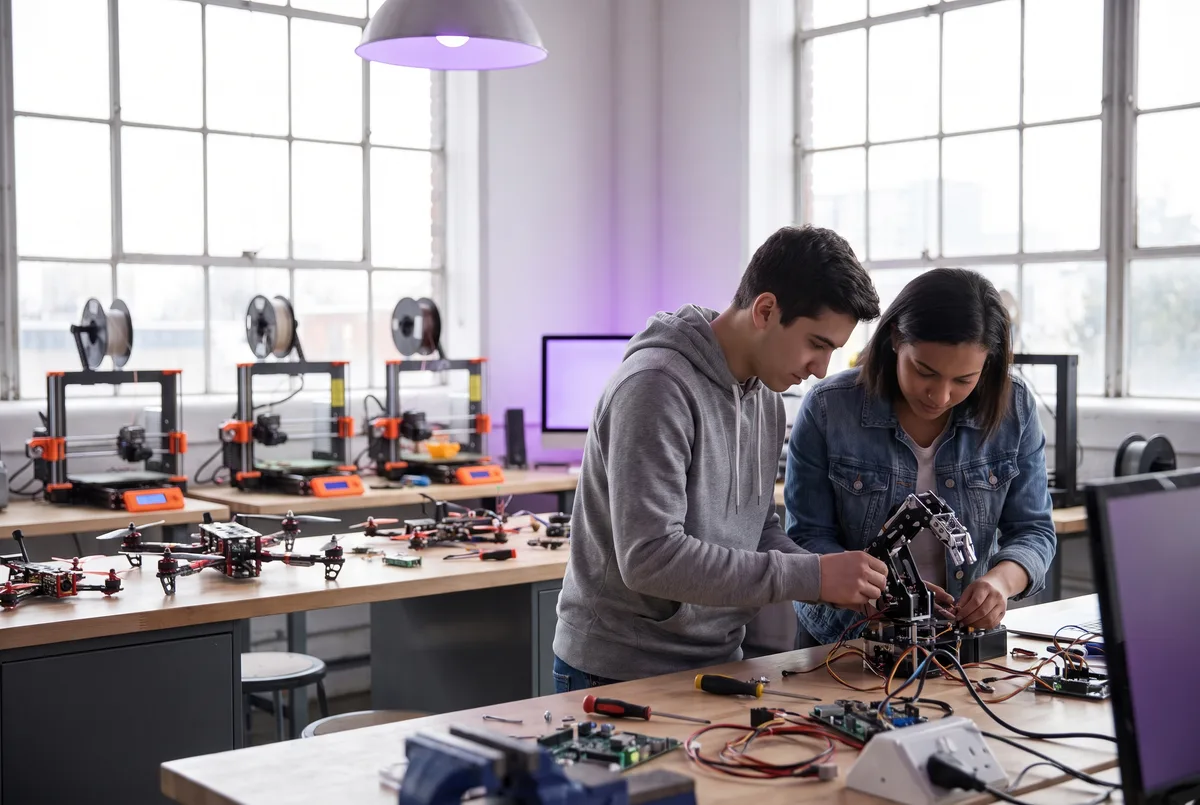
International Institute of Digital Technologies and Robotics
A joint site with the Chinese company Jiangsu Huibo Robotics: industrial robots, automation of production operations and training of engineers for them.
KINT — engineering center: design bureau and Farabi Robotics
An “idea to prototype” route: a design bureau and the Farabi Robotics team inside the university. Public sources state access to KazNU research equipment.
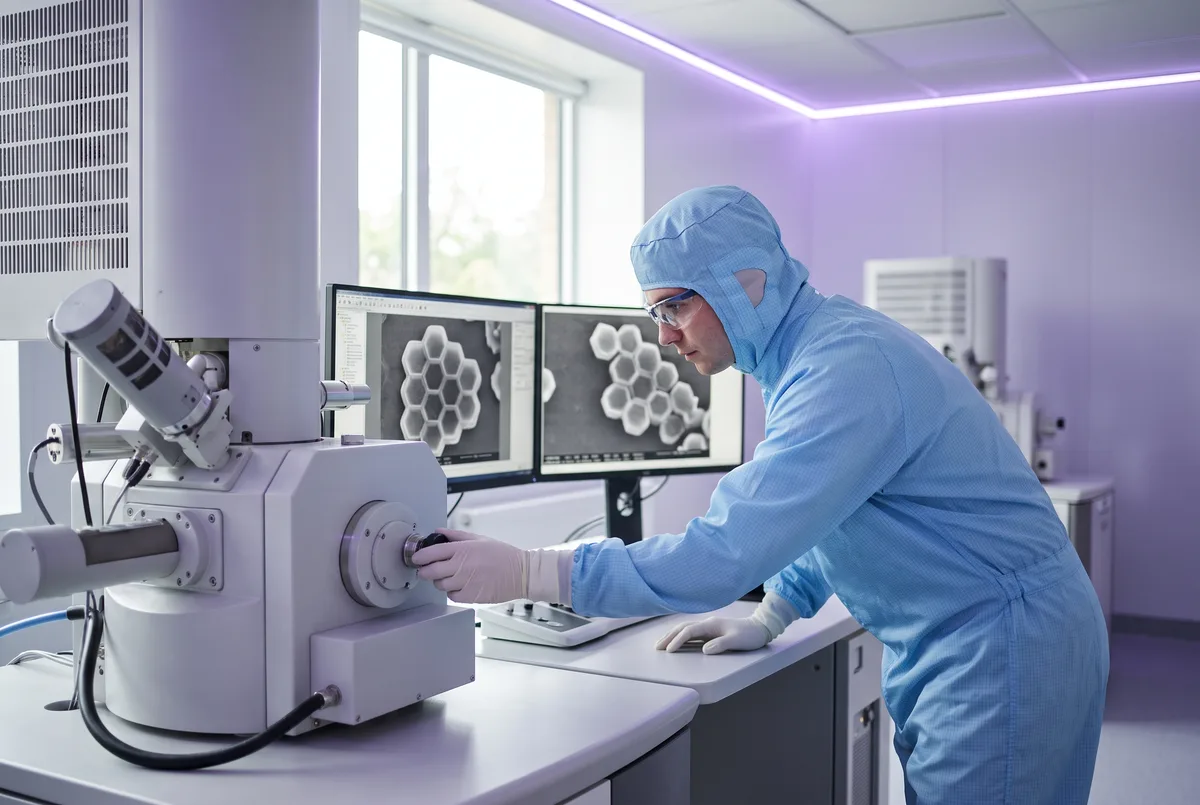
NNLOT — National Nanotechnology Laboratory of Open Type
Nanomaterials and nanoelectronics: graphene, carbon nanotubes, thin films. An open-access laboratory that, per public sources, explicitly offers services to external clients. Its instrument park is set up for third-party samples.
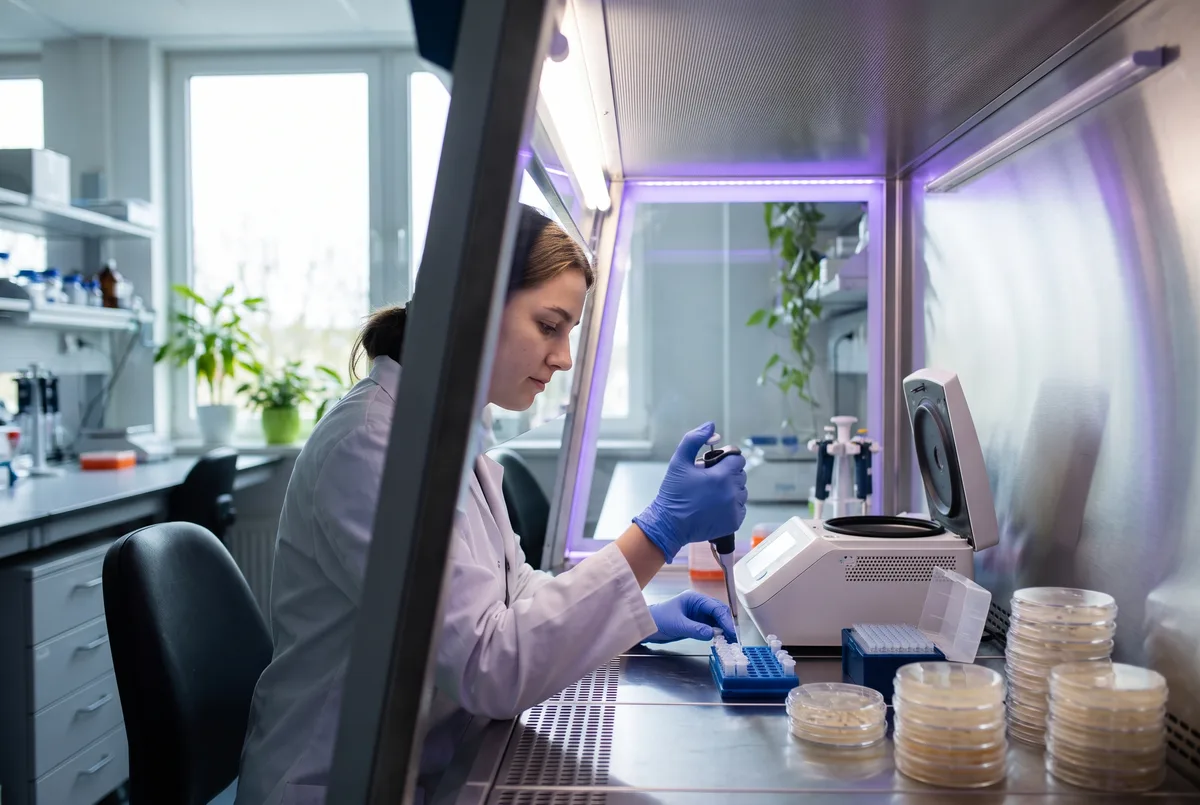
Research Institute of Biology and Biotechnology
Public sources report ten laboratories: molecular genetics, microbiology, mutagenesis. Applied tracks include bioremediation of contaminated sites, biofuel and development of test systems.
Research Institute of Ecology and Bioresources
About nine laboratories: ecotoxicology, aquaculture, zoology. The practical business value is environmental assessment of a site and regular monitoring of water bodies and bioresources.
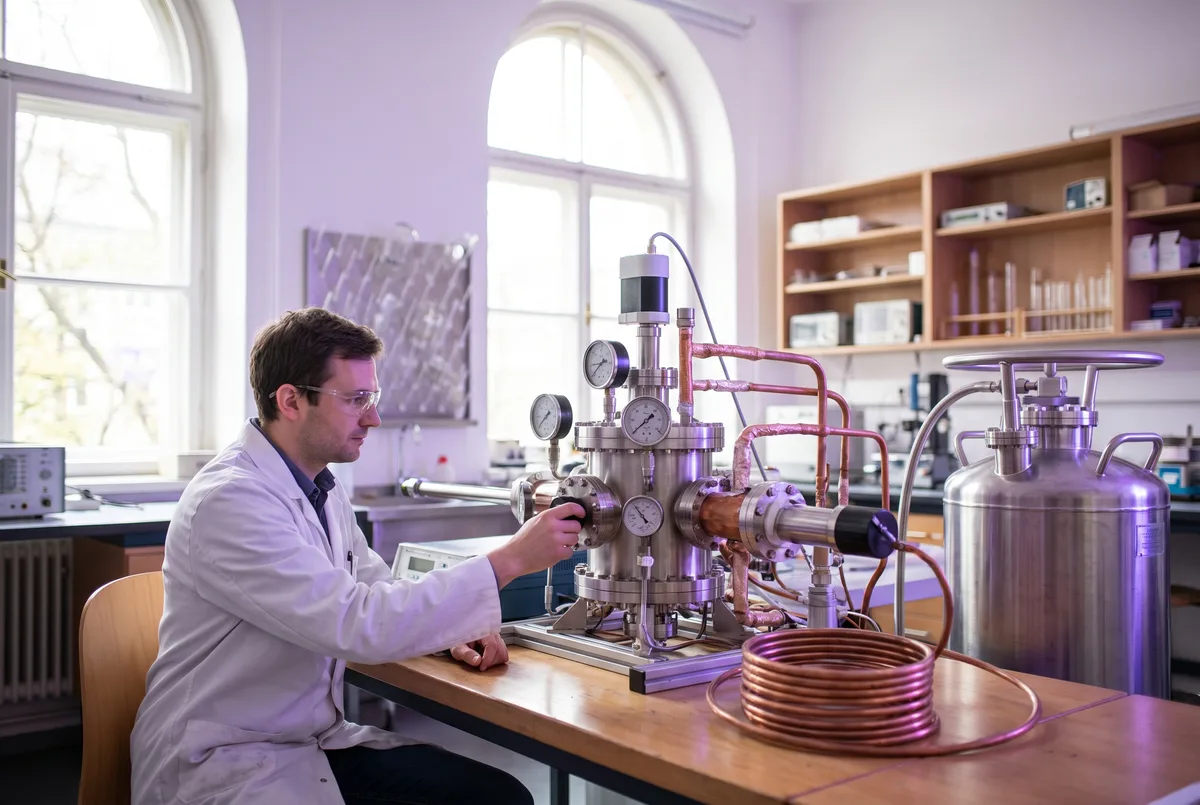
Research Institute of Experimental and Theoretical Physics (RIETP)
Plasma physics, nuclear physics, solid-state physics and thermal physics. Public sources describe the only inertial fusion center in Kazakhstan here, with staff participating in CERN experiments.
Research Institute of New Chemical Technologies
Public sources report ten laboratories: catalysis, oil and coal processing, bioactive substances, polymers. Unlike purely analytical centers, it has a pilot base at a machine-building plant — the ability to scale beyond the flask.
Four steps from task to sign-off
- 01
Request
You describe the task in plain words: what to measure, test or calculate. You do not need to know the name of the instrument.
- 02
A curator scopes it
The hub curator translates the task into a method: which instrument, how many samples, what the report will contain. Deadline and price are named here.
- 03
Contract with the hub
You sign with Farabi Tech Hub LLP — NDA, deadlines and a clear scope of work. The hub is accountable to you.
- 04
Lab work and sign-off
The laboratory does the work, you receive the result and the protocol, both sides sign the act. Any disputes go through the curator, not through you and the scientists.
The deal, with no grey zones
The client pays Farabi Tech Hub LLP. The hub pays the university for machine time and scientific consulting under a research contract, and the crew members under service agreements. Accountability to the client — contract, NDA, deadlines, quality — sits with the hub: the laboratory does the work, it does not sell and does not litigate.
Legal frame: the Law of Kazakhstan “On science and technology policy” (2024), articles 50–51.
Why a lab would want this
The hub takes on what a laboratory usually lacks: sales, the contract and accountability to the client.
Orders without a sales department
The hub finds and manages the client. The lab joins once the task is clear.
Paid machine time
An idle instrument starts earning instead of only depreciating.
A share for the authors — set by law
Author remuneration is distributed by the university under its own rules, not by the hub. The law sets the floor: at least 30% of the profit share from commercialisation goes to the authors (art. 50 of law No. 103-VIII).
An argument for the next grant
Documented equipment utilisation and industry work is a strong line in an application and a report.
Student crews on hand
Routine work is covered by vetted students from hub crews, under your scientific supervision.
A legal shield
Contract, NDA, claims and deadlines are the hub’s job. The lab does the science.
Describe your task
A curator will reply during working hours, confirm the method and name the deadline and the price. No obligations until then.
Got a task for a laboratory?
Describe it in plain words — a curator will reply and assemble the team.